Rain is not a reason to skip Kyoto. The best wet-weather plan is one big indoor stop (the Railway Museum, the Aquarium or the National Museum) plus a covered walk through Nishiki Market or Kyoto Station.
Check the day of the week first. The Railway Museum and the Manga Museum usually close on Wednesdays, and the National Museum and the Nishijin Textile Center usually close on Mondays. Use the picker below to see what is open on your day.
Pick your rainy-day plan
Choose the day you will be in Kyoto and what you feel like doing. Places that are closed that day stay on the list, greyed out, so you can see why.
The picker needs JavaScript. Without it, all nine places are listed below with their closed days.
Your day
What you want
The day buttons show regular weekly closures. Holiday-week exceptions (11 to 13 Oct and 23 to 25 Nov 2026) are listed on each card. Drops show how dry you stay: three means indoors, two means some areas are outdoors.
-
Closed on this day
Kyoto Railway Museum
Mostly indoorsReal trains and a driving simulator. Some areas are outdoors (the promenade, the Sky Terrace and the SL Steam ride), and the museum may close in severe weather. It recommends advance tickets, and the simulator needs an advance ticket.
-
Closed on this day
Kyoto Aquarium
Mostly indoorsOnline tickets (Webket membership needed) go on sale up to 30 days ahead. Some viewing terraces are outdoors.
-
Closed on this day
Kyoto International Manga Museum
IndoorsA reading museum, so you can pick up and read manga on site. The museum says a visit takes roughly 30 minutes to 1 hour.
-
Closed on Mondays (open 12 Oct and 23 Nov)
Kyoto National Museum
IndoorsThe galleries are closed until 4 Oct 2026 and reopen on 6 Oct with this exhibition. Getting to the exhibition hall involves a short outdoor walk across the grounds.
-
Closed on this day
Sanjusangendo
Mostly indoorsA very long temple hall, so most of the visit is under a roof. The grounds are outdoors.
-
Closed on Mondays (open 12 Oct and 23 Nov)
Nishijin Textile Center
IndoorsThe centre lists a kimono show and weaving viewing, but showtimes are not published on the official page, so ask at the desk. Kimono dressing needs a reservation in advance.
-
Closed on this day
Gekkeikan Okura Sake Museum
IndoorsReservations are optional but recommended. Walk-in visitors may be asked to wait. Fushimi is a short Keihan ride from the Shichijo area.
-
Many shops close on Wednesdays
Nishiki Market
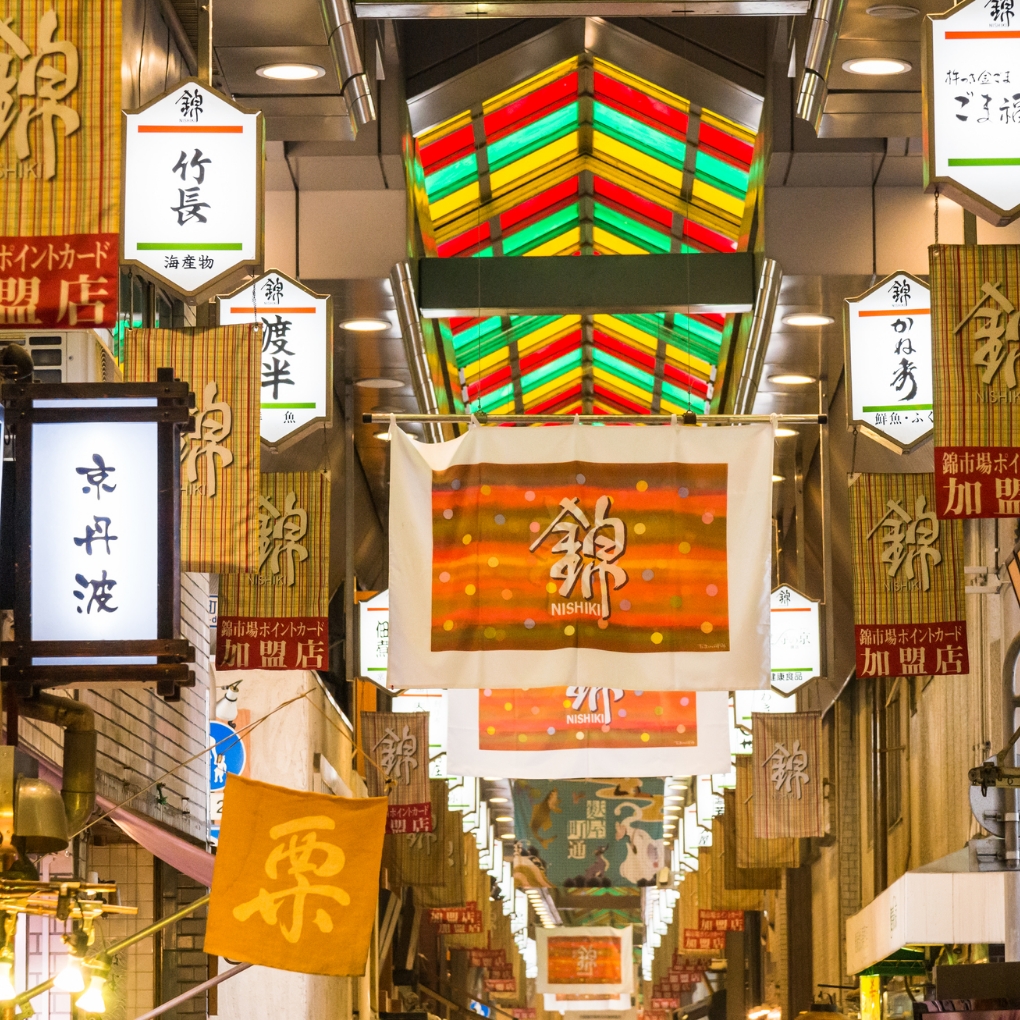
Mostly coveredA 390 m arcade. The market asks visitors not to eat while walking: eat at or in front of the shop you bought from. It gets very crowded.
-
Closed on this day
Kyoto Station Building
Mostly indoorsA handy dry fallback if plans fall through. The Sky Garden is on the roof, so skip it in the rain. It is also due to close for construction from late November.
Pair them: three easy rainy-day routes
Each pair is only a few minutes’ walk or one short ride apart, so you spend little time in the rain. Bring an umbrella for the walk.
Both are next to JR Umekoji-Kyotonishi Station (2 and 7 minutes on foot), so this is a good fit for a family day. On most Wednesdays the Railway Museum is closed, so go to the Aquarium only.
Both are about 7 minutes from Keihan Shichijo Station, so you can do art and history in one trip. On Mondays the National Museum is closed, so switch to Sanjusangendo and the sake museum in Fushimi.
Both are served by the Karasuma subway line, and the market arcade is about 3 minutes on foot from Shijo Station. On Wednesdays the museum is closed (except 25 Nov) and many market shops are shut, so go to Kyoto Station Building instead.
Getting around when it rains
The Kyoto City Subway and Bus 1-Day Pass costs ¥1,100 for adults and ¥550 for children, and it is valid for one calendar day, not 24 hours. The pass covers city subway and city bus only, not JR, Keihan or Hankyu trains. A subway-only 1-day pass costs ¥800. If most of your rainy-day stops are on the subway, the cheaper pass is enough.
Kyoto City has proposed a higher city-bus fare for non-residents (¥350 to ¥400) from fiscal 2027, but this still needs national approval and nothing has changed yet. What happens to the 1-day passes has not been decided, so check the Transportation Bureau site before you buy. For a full plan that works around the weather, see our 3-day Kyoto itinerary, and if you are still choosing where to stay, our area-by-area guide shows which neighbourhoods keep you close to a subway line.
When does it rain in Kyoto?
The short version
Rainy season (tsuyu): the Japan Meteorological Agency gives an average start around 6 June and an average end around 19 July for the Kinki region. June and early July are the rainy season.
September: the JMA says monthly rainfall in the Kinki region is large because of the autumn rain front and typhoons. Across Japan, an average of 3.3 tropical cyclones approach the country in September and 1.7 in October (1991 to 2020), but these are national figures, not Kyoto-only.
October: often sunny, with passing high-pressure systems, according to the JMA.
If a typhoon is forecast, check the Japan Meteorological Agency and each venue’s official page before you set out, because closures and changed hours are announced there. How long to stay overall? See how many days you need in Kyoto.
What to skip when it rains
UZUMASA KYOTO VILLAGE (formerly Toei Kyoto Studio Park)
It was renamed and reopened in late March 2026 after a renewal. Much of it is an outdoor Edo-style street set, and outdoor shows may be cancelled in bad weather (some shows are held indoors). A full-day ticket is ¥2,800 and prices vary by date. Save it for a dry day.
FAQ
Is Kyoto still worth visiting in the rain?
Yes. Kyoto has plenty of indoor options. Plan one main indoor stop per day and keep a covered fallback such as Kyoto Station Building or Nishiki Market.
Which places are open on a Wednesday?
The Kyoto Aquarium, the National Museum, Sanjusangendo (check its closed days), the Nishijin Textile Center, the Gekkeikan sake museum and Kyoto Station Building. The Railway Museum (some holiday exceptions) and the Manga Museum (open on Wed 25 Nov 2026) are closed, and many Nishiki Market shops are shut.
Which places are open on a Monday?
The Railway Museum, the Aquarium, Sanjusangendo (check its closed days), the Manga Museum (except Monday 12 Oct 2026), the sake museum, Nishiki Market and Kyoto Station Building. The National Museum and the Nishijin Textile Center are closed on Mondays, but on the public-holiday Mondays 12 Oct and 23 Nov 2026 both are open and close the next day instead.
Do I need to book tickets?
Not always, but it helps. The Railway Museum recommends advance tickets, and its driving simulator needs advance booking. The Aquarium sells online tickets up to 30 days ahead. The sake museum takes optional reservations.
How long does the rainy season last?
On average it runs from early June to mid-July in the Kinki region, according to the Japan Meteorological Agency.
Prices, hours and closed days were checked on 2 October 2026 against the official websites and press releases of each venue, the Kyoto City Transportation Bureau and the Japan Meteorological Agency. Prices and opening days change, and some items on this page are time-limited, so confirm on the venue’s own site before you go.