
Three full days is the right amount of time for a first visit to Kyoto. It covers every headline sight at a pace that still leaves room for a long lunch. Two days feels rushed, and four or five lets you add Nara or Uji and slow down.
“Full days” matters here. The day you arrive from Tokyo or the airport rarely counts, because you lose the morning to travel and many Kyoto temples close in the late afternoon (Kinkaku-ji at 5 pm, Kiyomizu-dera at 6 pm). So a “3-day” stay really means four nights: arrive, three sightseeing days, leave. The quick quiz below adjusts that answer for your own trip.
How many days do you need?
1. Is this your first time in Kyoto?
2. Do you want day trips from Kyoto?
3. What pace do you like?
4. Are you visiting in cherry blossom or autumn leaf season?
The classic first visit: eastern Kyoto and Gion, Arashiyama and the golden pavilion, then Nijo Castle and the Philosopher’s Path.
What each number of days gets you
The bars show how many of Kyoto’s ten essential sights you can see without rushing: Fushimi Inari, Kiyomizu-dera, Gion, the Arashiyama bamboo grove, Tenryu-ji, Kinkaku-ji, Ryoan-ji, Nijo Castle, Nishiki Market and the Philosopher’s Path.
A sampler
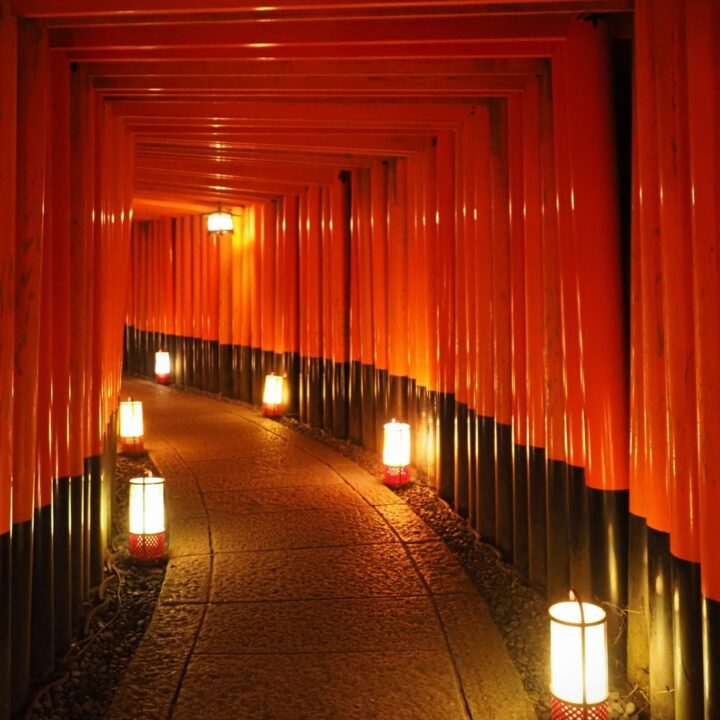
Fushimi Inari at 8 am, Kiyomizu-dera and the old lanes of Higashiyama, then dusk in Gion. It is a great day, but you leave knowing you have missed most of the city.
3 of 10 essentials
The highlights, quickly
Add Arashiyama on day two: the bamboo grove and Tenryu-ji first thing, then Kinkaku-ji in the afternoon. Doable, but you will spend a lot of it on buses and in queues.
6 of 10 essentials
The sweet spot Best for first visits
Everything above plus Ryoan-ji, Nijo Castle, Nishiki Market and the Philosopher’s Path to Ginkaku-ji. Our 3-day Kyoto itinerary lays it out hour by hour.
10 of 10 essentials
Room to breathe, plus Nara
Use the extra day for Nara (45 minutes by JR) and its deer park, or for a slower second look at places you loved. You can also spread sights out so evenings are free.
10 of 10, plus one day trip
Kyoto beyond the checklist
Uji for matcha, the mountain shrines of Kurama and Kibune, the countryside temples of Ohara, or a cooking class. Five days in Kyoto is when the city stops feeling like a list.
10 of 10, plus two or more day trips
How to split a Japan trip
Most first-time visitors pair Kyoto with Tokyo. These splits count nights, including the travel days between cities.
A route that adds Hiroshima and returns to Tokyo within the same 7 days is where a JR Pass can start to pay off. For most trips it doesn’t: see Is the JR Pass worth it for Kyoto?
Stay in Kyoto or day-trip from Osaka?
If you decide to stay in Kyoto, our guide to where to stay compares every area, from Kyoto Station to Gion and Arashiyama. Flying into Kansai Airport? See the fastest way from the airport to Kyoto.
FAQ
Is 2 days in Kyoto enough?
It is enough to see the headline sights if you start early both days, but you will have to skip Ryoan-ji, Nijo Castle, Nishiki Market and the Philosopher’s Path. If you can, add a third day.
Is a day trip to Kyoto from Tokyo worth it?
Only if there is no other option. It takes over 2 hours each way by shinkansen and costs about ¥28,340 round trip at regular-season Nozomi reserved fares, which leaves around 7 hours in the city. Stay at least one night.
Should I spend more days in Kyoto or Osaka?
Kyoto, for most first-time visitors. Osaka is better for food and nightlife, and 1–2 days covers its main sights. Kyoto has far more to see and it closes earlier, so each day covers less.
Do I need extra time in peak season?
In late March to early April and mid-November to early December, add half a day. Expect longer queues at Kiyomizu-dera, Arashiyama and Kinkaku-ji, and fuller buses. Start before 8 am and sightsee on foot where you can.
Updated October 2026. Fares checked against JR West and JR Central announcements and fare-search sites; temple hours checked on the temples’ official sites.