
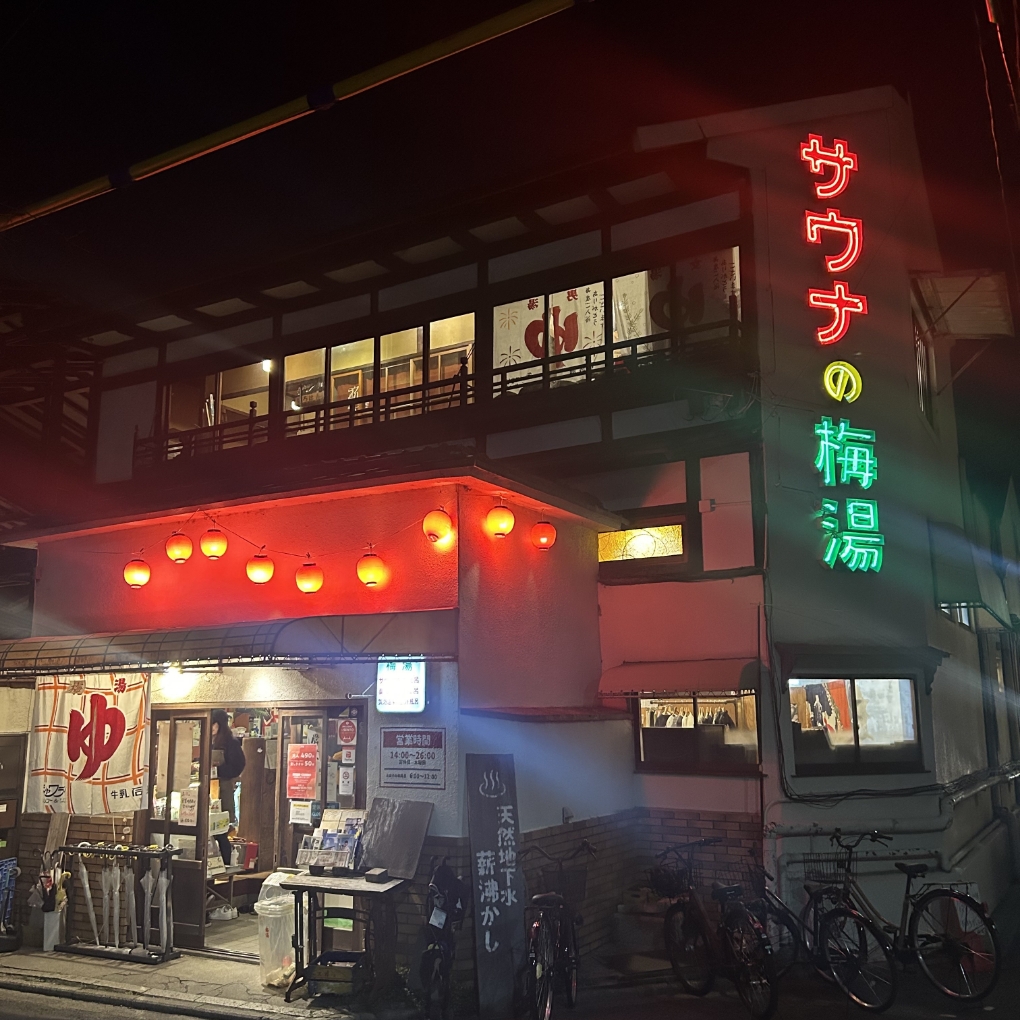
In short: a sento is a neighbourhood public bath. In Kyoto, the adult price is capped at ¥550 (¥200 for ages 6–11, ¥100 for under-6s). Until 31 March 2027, a Kyoto Prefecture scheme lets children of elementary-school age and younger bathe free with an adult aged 18 or over. The Kyoto sento cooperative says credit cards and electronic money are not accepted, so bring coins.
The basics: shoes off at the entrance, pay at the desk, undress completely, rinse before you get in, keep your towel and hair out of the water, and dry off before you go back to the changing room. Tattoo rules differ from bath to bath, and we found no Kyoto-wide rule, so ask at the desk.
Kyoto’s sento are part of everyday life: the place people go at the end of the day, or first thing on a Sunday morning. Kyoto City’s tourism site describes them as places to enjoy the old-fashioned atmosphere of everyday life in Japan, and points out that they are not hot springs under the regulations. The Kyoto sento cooperative’s site introduces more than 100 of them.
This guide covers how to use one, step by step, what it costs and what to bring. Everything comes from official sources: Kyoto Prefecture, Kyoto City, the Kyoto Prefectural Cooperative of Public Bath-house Operators (Kyoto Sento) and the Japan National Tourism Organization (JNTO). We don’t rate individual baths.
Step-by-step checklist
Keep this open on your phone and tick off each step, from the door to the drinks fridge. Leave the phone in your locker before you go into the bathing area. The steps follow the Kyoto sento cooperative’s official guide, with one tip from Kyoto City’s tourism site.
0 of 10 steps done
At the entrance
Changing room
Bathing room
Leaving
All done. Otsukaresama deshita!
What does a sento cost in Kyoto?
Prices at ordinary sento are capped by each prefecture’s governor. Kyoto Prefecture raised its cap on 1 April 2025, and the Kyoto sento cooperative lists the same prices:
| Age | Price (from 1 April 2025) | Before |
|---|---|---|
| Adults (12 and over) | ¥550 | ¥510 |
| Children (6–11) | ¥200 | ¥160 |
| Under 6 | ¥100 | ¥60 |
- 10-visit ticket: the cooperative lists a 10-visit adult ticket for ¥5,300.
- Sauna: Kyoto City’s tourism site says most Kyoto sento include the sauna in the standard price. If you’re not sure, ask at the desk.
- Payment: the cooperative says credit cards and electronic money are not accepted, so bring plenty of small change. Our guide to how much cash you need in Kyoto helps you plan.
Price calculator
Etiquette: the six don’ts
The Kyoto sento cooperative and Kyoto City’s tourism site list the same six rules:
- Don’t bathe when you’ve been drinking.
- Don’t jump into the bath or swim in it.
- Don’t put your towel in the bath water. Fold it and put it on the edge of the tub (Kyoto City adds that your head is fine too).
- Don’t let long hair go into the water.
- Sit down to shower, and don’t splash the people next to you.
- Use only one washing space and one locker.
Two more from JNTO’s bathing guide: speak quietly, and leave your phone outside the bathing area. For a wider look at manners in Kyoto, see our temple and shrine etiquette guide.
Tattoos at Kyoto sento
There is no single rule. The Kyoto sento cooperative’s how-to guide doesn’t mention tattoos, and we found no Kyoto-wide policy, so each bath decides for itself. JNTO says some traditional onsen may not accept people with tattoos, but that this is beginning to change. It adds that cover stickers are generally suitable only for very small tattoos, and suggests looking for tattoo-friendly places or booking a private bath (kashikiri-buro).
What to bring
- A small towel for washing and for drying off before the changing room.
- Soap and shampoo. The cooperative’s sento search lets you filter by baths that rent towels or sell towels, soap and shampoo.
- Coins and small notes for the entry fee and a drink.
- A hair tie if you have long hair.
Types of baths you’ll see
Electric bath (denki-buro)
A bath with a mild electric current. The cooperative recommends it only for experienced bathers and says to avoid it if you have a heart condition.
Sauna and cold bath
Saunas are in a separate room and come in several types, such as electric, mist and far-infrared. The cold bath is for cooling down after the sauna or before you leave.
And more
The cooperative also lists shallow and deep baths, jet baths, aroma baths and open-air baths. Which ones you’ll find depends on the sento.
Morning baths
Most of the sento in Kyoto City’s feature on morning baths (information as of February 2026) open from mid-afternoon, with early opening on Sundays or weekends. For example, the cooperative lists Funaoka Onsen in Kita Ward from 8:00 on Sundays, and Sauna no Umeyu in Shimogyo Ward from 6:00, with Thursday as its closing day. Hours change, so check the cooperative’s sento search before you go. On a cold day, a bath is a good way to warm up; see Kyoto in winter for more.
FAQ
How much is a sento in Kyoto?
Kyoto Prefecture’s price cap, in place since 1 April 2025, is ¥550 for adults (12 and over), ¥200 for ages 6 to 11 and ¥100 for under-6s. Until 31 March 2027, children of elementary-school age and younger can bathe free at member sento with an adult aged 18 or over. The prefecture’s bath fee council met on 22 October 2026 to consider a change, so check for updates.
Can I pay by card at a Kyoto sento?
The Kyoto sento cooperative says credit cards and electronic money are not accepted. Bring cash, ideally coins.
Can I go to a sento with tattoos in Kyoto?
It depends on the bath. We found no Kyoto-wide rule. Ask at the front desk before paying. JNTO notes that cover stickers generally only work for very small tattoos.
Do I need to bring my own towel?
It helps. Bring a small towel, soap and shampoo, or buy them at the desk. The cooperative’s sento search shows which baths rent or sell towels.
Is the sauna extra?
Kyoto City’s tourism site says most Kyoto sento include the sauna in the standard price. Ask at the desk if you’re not sure.
Checked 4 November 2026 against Kyoto Prefecture’s announcements on public bath prices (pref.kyoto.jp), the Kyoto Prefectural Cooperative of Public Bath-house Operators (1010.kyoto), Kyoto City’s official tourism site (kyoto.travel) and JNTO’s bathing guide (japan.travel). Prices and hours can change, so check before you go.


