
In short: at an izakaya (a Japanese pub that serves food), you sit down, order a first drink, and a small dish called otoshi arrives without being ordered. Kyoto City’s official tourism site says it usually costs about ¥300–500 per person before tax, and Japan’s national tourism organization (JNTO) says it works like a cover charge. Order a few small dishes at a time to share, call staff with “Sumimasen!” (or the buzzer), and pay at the register when you leave.
No tipping. JNTO says tipping in bars and restaurants isn’t common. Smaller places may not take cards, so bring cash. The legal drinking age is 20.
How an izakaya night works, step by step
Tap through the seven steps. Each one has a short phrase you can say, written in simple romanised Japanese.
1. Walk in and say how many
Staff will greet you. Hold up fingers or say the number of people. If the place is full, they may ask you to wait or come back.
Futari desu. — “Two people.” (Hitori = 1, futari = 2, san-nin = 3, yo-nin = 4)What is otoshi, and do you have to pay it?
Otoshi (also written otoushi) is a small appetizer brought to the table at the start, before you’ve ordered any food. Kyoto City’s official tourism site says otoshi comes from a tradition of hospitality, a way of not keeping you waiting for food, and that it usually costs about ¥300–500 per person (before tax). Japan’s national tourism organization (JNTO) describes otoshi as working like a cover charge that appears on your bill.
- Expect it to be charged. It’s normal, not a scam. Think of it as a per-person seat fee that comes with a small dish.
- Allergies or diet? Kyoto City’s tourism site says you can ask the staff whether they can serve you something else, or tell them you’d rather not have it. Some places will still charge it, so ask when it arrives, or contact the restaurant before you go.
- Not every place does it. Chains, standing bars and casual spots vary. If you want to know before you sit down, ask: “Otōshi wa arimasu ka?” (“Is there an otoshi?”).
Ordering: drinks first, then small plates
The first drink
Drinks are ordered first, and groups often order the same drink for the first toast (“kanpai!”). Beer is the classic opener across Japan. Kyoto City’s tourism site notes that in Kyoto, locals often start with a glass of sake instead, so it’s a good city to try that.
Food: order in rounds and share
Izakaya food is meant to be shared. You’ll get a small plate (torizara) each for taking portions. Dishes are small, so order two or three, then add more as you go. Kyoto City’s tourism site suggests starting light (salad, sashimi), then moving on to grilled, simmered or fried dishes.
Finish with “shime”
Many people end with a shime (pronounced “she-may”): a final rice or noodle dish such as rice porridge, ochazuke (rice with tea or broth poured over), grilled rice balls or ramen.
Calling staff
If there’s a buzzer on the table, press it. If not, raise your hand and say “Sumimasen!” (“Excuse me!”). It isn’t rude to call out; it’s how it works. Some places use tablet or QR-code ordering instead. Menus are often Japanese-only, so a translation app helps.
Phrase cards to show the staff
Tap a card to show it in large text, then turn your phone to the staff.
Nomihodai (all-you-can-drink): how it works
Many izakaya offer nomihōdai, a set price for unlimited drinks from a set list. JNTO says these plans usually last one to two hours. Each place sets its own rules, so check the menu or ask. Common rules include:
- Time limit and last order. Staff usually call last order (“rasuto ōdā”) before the time is up.
- Who has to join. Some places ask everyone at the table to take the plan, or offer it only with a set course. Ask before you order.
- Which drinks are included. Premium sake or certain spirits may be left out.
- One glass at a time. You normally order a new drink when you’ve finished the last one.
Separately, JNTO notes that some izakaya set a two-hour time limit for all customers on busy nights, even without nomihodai.
Bill estimator: what will the night cost?
Enter what you plan to order. The estimator adds the otoshi per person and shows whether nomihodai beats paying per drink. The default otoshi is ¥400, inside the ¥300–500 (before tax) range Kyoto City’s tourism site gives. Change it if your izakaya shows a different price.
About ¥4,050 per person.
Enter a nomihodai price to compare it with paying per drink.
Most menus should already include tax: since 1 April 2021 Japan has required businesses to show tax-inclusive prices to consumers, menus included. If a menu says 税別 or 税抜 (tax excluded), tick the box above to add 10% for eating in. If you’re carrying cash, our guide to how much cash you need in Kyoto covers where cards do and don’t work.
Paying and tipping
- Pay at the register. When you’re done, ask for the bill or take the slip on your table to the register by the door.
- No tip. JNTO says tipping isn’t common in Japanese bars, cafés and restaurants.
- Bring cash. JNTO notes that smaller places may not accept cards. Ask “Kādo wa tsukaemasu ka?” before you order if you need to pay by card.
- Splitting the bill. One payment per table is the simplest option. If you want to split, ask at the register; not every place can.
Smoking rules in izakaya
Kyoto City’s tourism site warns that many izakaya allow smoking, so they may not suit non-smokers or families with children. Here’s what Japan’s rules say:
- The general rule: since 1 April 2020, the Health Promotion Act has banned indoor smoking in restaurants and bars in principle. Smoking is allowed only in designated smoking rooms (no food or drink), or in heated-tobacco rooms where eating and drinking are allowed.
- The small-bar exception: under a transitional rule, small places already open when the law took full effect (capital of ¥50 million or less, not majority-owned by a large company, and a customer area of 100 m² or less) can still allow smoking. They must post a sign at the entrance saying so.
- Under-20s: people under 20 may not enter areas where smoking is allowed, staff included. If you’re travelling with teenagers, check the sign at the door.
- Outside: Kyoto City’s rules say not to smoke on streets anywhere in the city except at designated smoking spots. In the enforcement zones (currently the city centre, around Kyoto Station, and the Kiyomizu and Gion areas), you can be fined ¥1,000. Check the city’s map for the current zones.
Standing bars (tachinomi)
A tachinomi is a standing bar: no chairs, just a counter or small tables, a short menu and quick, cheap drinks and snacks. They’re good for one or two drinks before dinner, or for solo travellers. You’ll find them in Kyoto too. Unlike a sit-down izakaya, some standing bars have you order at the counter, and payment styles vary from place to place.
- Make room. Spaces are tiny and often crowded. Keep bags off the counter and shuffle along to make space when someone comes in.
- Keep your voice down. Talking with the person next to you is part of the fun, but don’t be loud.
- Help the staff. When it’s busy, pass your empty plates and glasses back to the counter.
- Ask how payment works. Some standing bars ask you to pay each time you order, others at the end. If you’re not sure, ask: “Saki-barai desu ka?” (“Do I pay first?”).
- Menus are short and often handwritten. Point, use a translation app or ask “Osusume wa?” JNTO says owners are usually happy to help.
- Still no tip. JNTO’s guide to standing bars says there’s no need to tip the staff.
For a sit-down evening on a famous street, see our guide to Pontocho, the narrow alley of restaurants by the Kamo River. If you’re still hungry late at night, try our pick of late-night teppanyaki in Kyoto.
Five things that surprise first-timers
| What happens | What it means |
|---|---|
| A small dish arrives that you didn’t order | The otoshi, usually charged per person |
| A hot or cold wet towel | Oshibori, for wiping your hands before eating |
| Staff shout a greeting as you walk in | “Irasshaimase!” (“Welcome!”) You don’t need to reply |
| Someone at the next table is smoking | Allowed in qualifying small bars that post a sign, or in a smoking room |
| “Rasuto ōdā” is called | Last order: the kitchen or nomihodai is about to close |
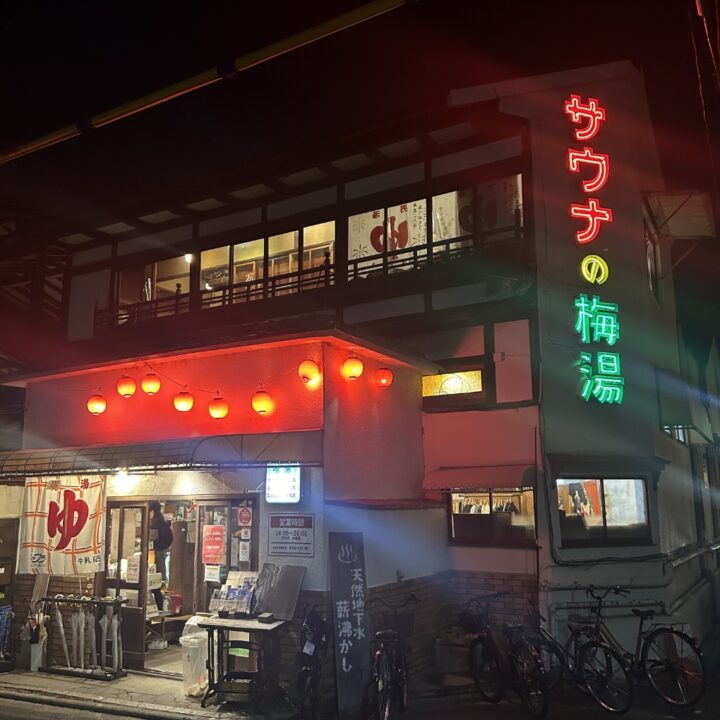
Wrapping up a long day? A neighbourhood bath before or after the izakaya is a very Kyoto evening. See how to use a sento in Kyoto.
FAQ
What is the otoshi charge at an izakaya?
Otoshi is a small appetizer served at the start without being ordered. It works like a cover charge and appears on your bill. Kyoto City’s official tourism site says it usually costs about ¥300–500 per person before tax.
Can I refuse the otoshi?
Kyoto City’s tourism site says you can ask the staff whether they can serve you something else, or tell them you’d rather not have it. Some places will still charge it. If you want to know before you sit down, ask at the door or contact the restaurant in advance.
Do you tip at an izakaya in Japan?
No. JNTO says tipping isn’t common in Japanese bars and restaurants. Pay the amount on the bill at the register.
How long is nomihodai?
JNTO says all-you-can-drink plans usually last one to two hours. Each izakaya sets its own time limit, drink list and rules, such as whether the whole table must join.
Can you smoke in izakaya in Kyoto?
Indoor smoking in restaurants and bars has been banned in principle since April 2020. Existing small bars that meet size and capital limits can still allow it and must post a sign at the entrance. People under 20 can’t enter smoking areas.
What is the drinking age in Japan?
The legal drinking age in Japan is 20.
Checked 10 November 2026 against Kyoto City’s official tourism site (kyoto.travel: nightlife and street-smoking pages), JNTO (japan.travel: izakaya dining, tipping, nightlife and standing-bar guides; JNTO’s izakaya feature), Japan’s Ministry of Health, Labour and Welfare (Health Promotion Act outline) and the Government of Japan’s notice on tax-inclusive price display (gov-online.go.jp). Prices and rules vary between izakaya, so check the menu or ask the staff.